
ABOUT MILENA MICHALSKI
Milena Michalski is Senior Visiting Research Fellow at King’s College London. Her visual arts practice engages particularly with place and perception, site and sight, and complements her academic research.
Working with printmaking and camera-less, analogue photographic techniques, often through site specific installation, Milena traces hidden or suppressed stories of places or moments. She uses plant pigments and botanical materials in her prints and is currently experimenting with making her own natural screenprinting inks.
Milena co-runs alternative process workshops at Darkroom London including ‘Albumen Printing’ and ‘The Silver Garden: Cultivating Camera-less images’.
Recent publications include:
‘Alternative Photographic Processes: Developing Your Fruit and Veg’,
(with Elisabeth Scheder-Bieschin), Black + White Photography, issue 308, November 2025, pp. 66-69
‘Planting Prints’, Printmaking Today, vol. 33, no. 131, Autumn 2024, pp. 34-35
Enmeshed
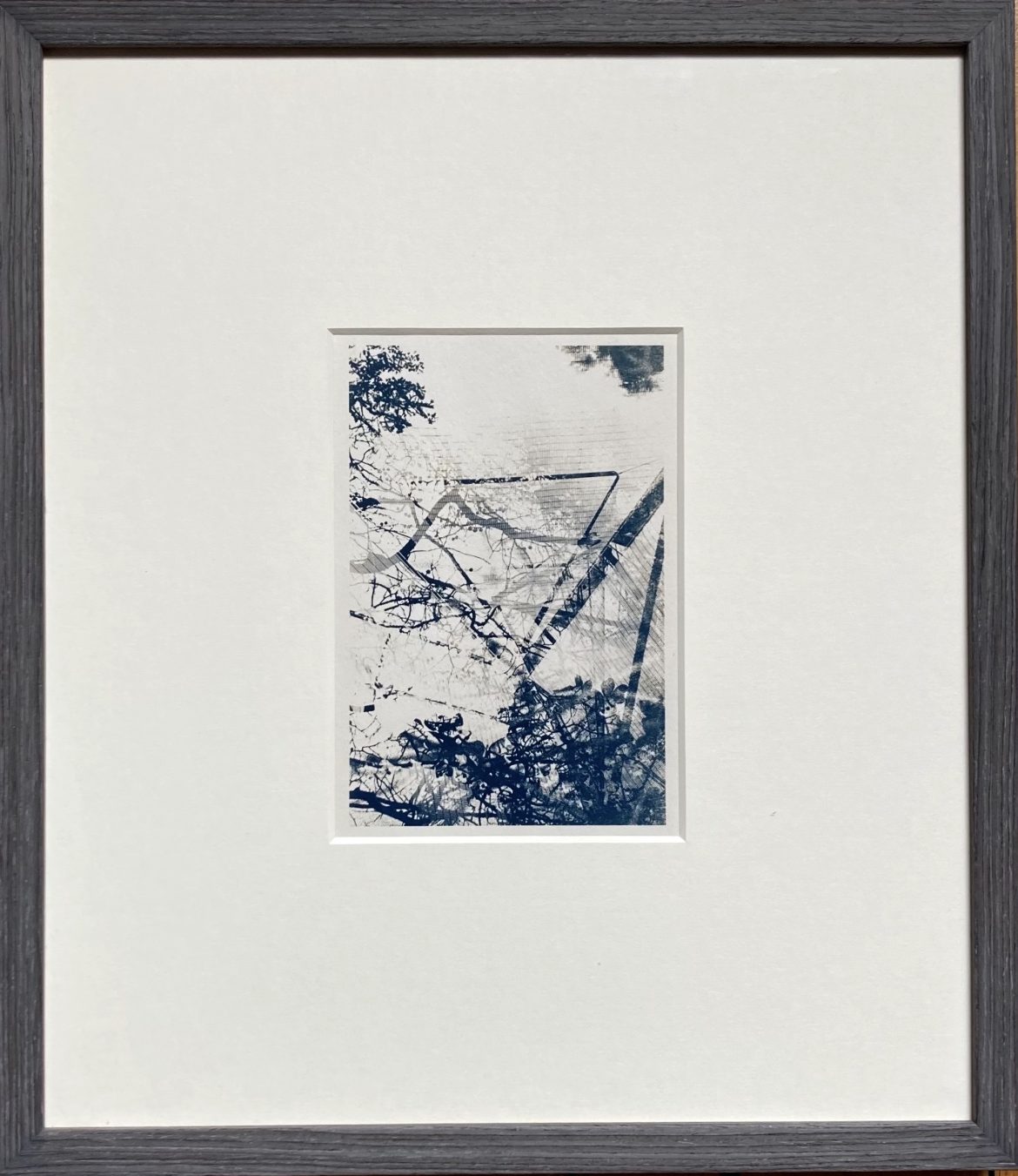
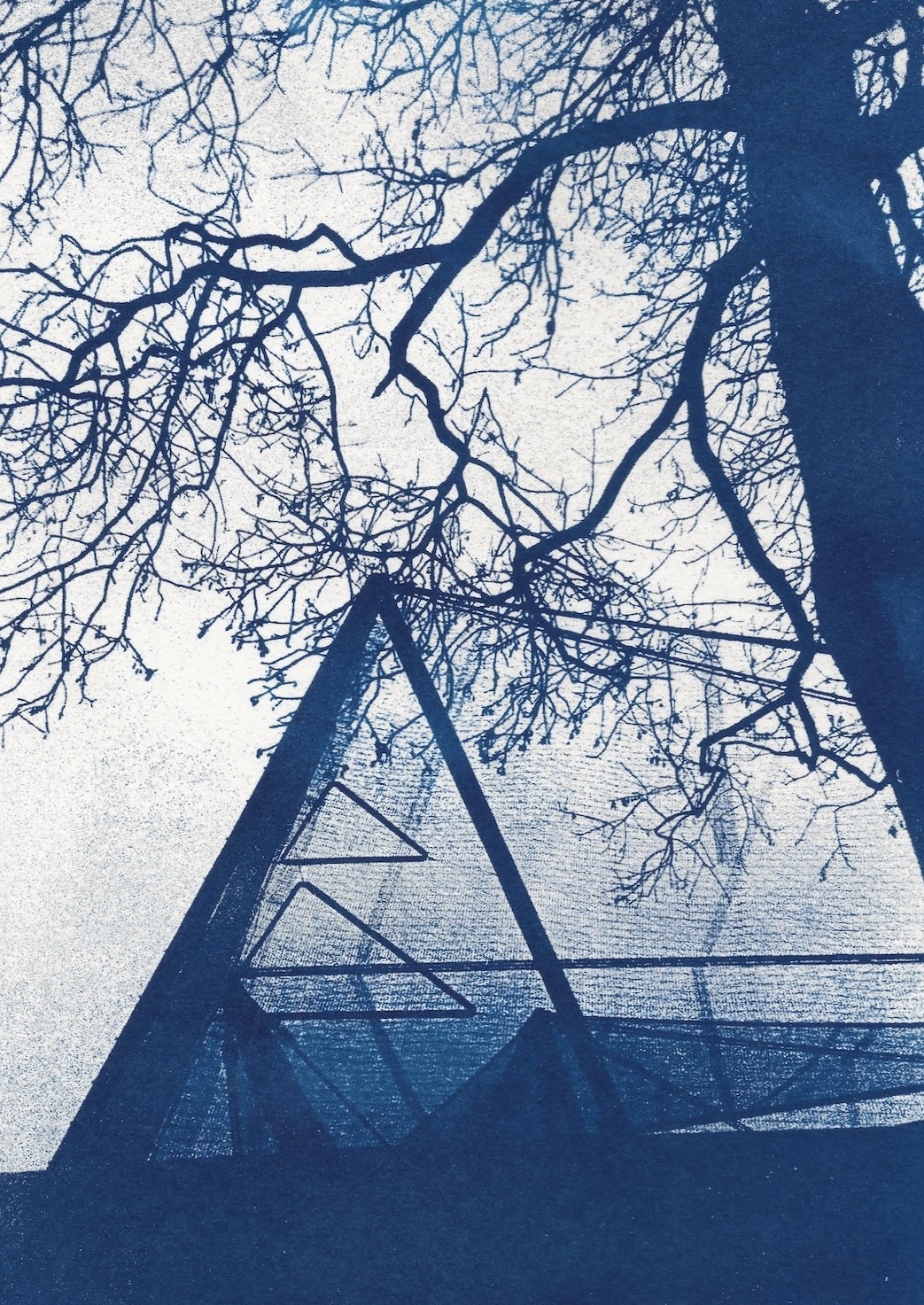
The aviary prints are part of ‘Enmeshed’, Milena’s series of cyanotypes on Fabriano Accademia paper, created for Michaela Nettell’s book ‘LESS A BUILDING: Interactions with the London Zoo Aviary’, published September 2021.
These cyanotypes originate from photographs, many taken by Milena on 35mm film during the Covid-19 pandemic enforced isolation period, when the aviary was undergoing transformation, others taken by Michaela Nettell earlier, when the aviary could still be entered. Milena developed her film in a homemade leaf solution, and exposed the cyanotypes in sunlight. Some prints in this series were also toned in leaves or wine tannin. The interaction of nature and the man-made is key in both subject and process of this work.
Still Standing
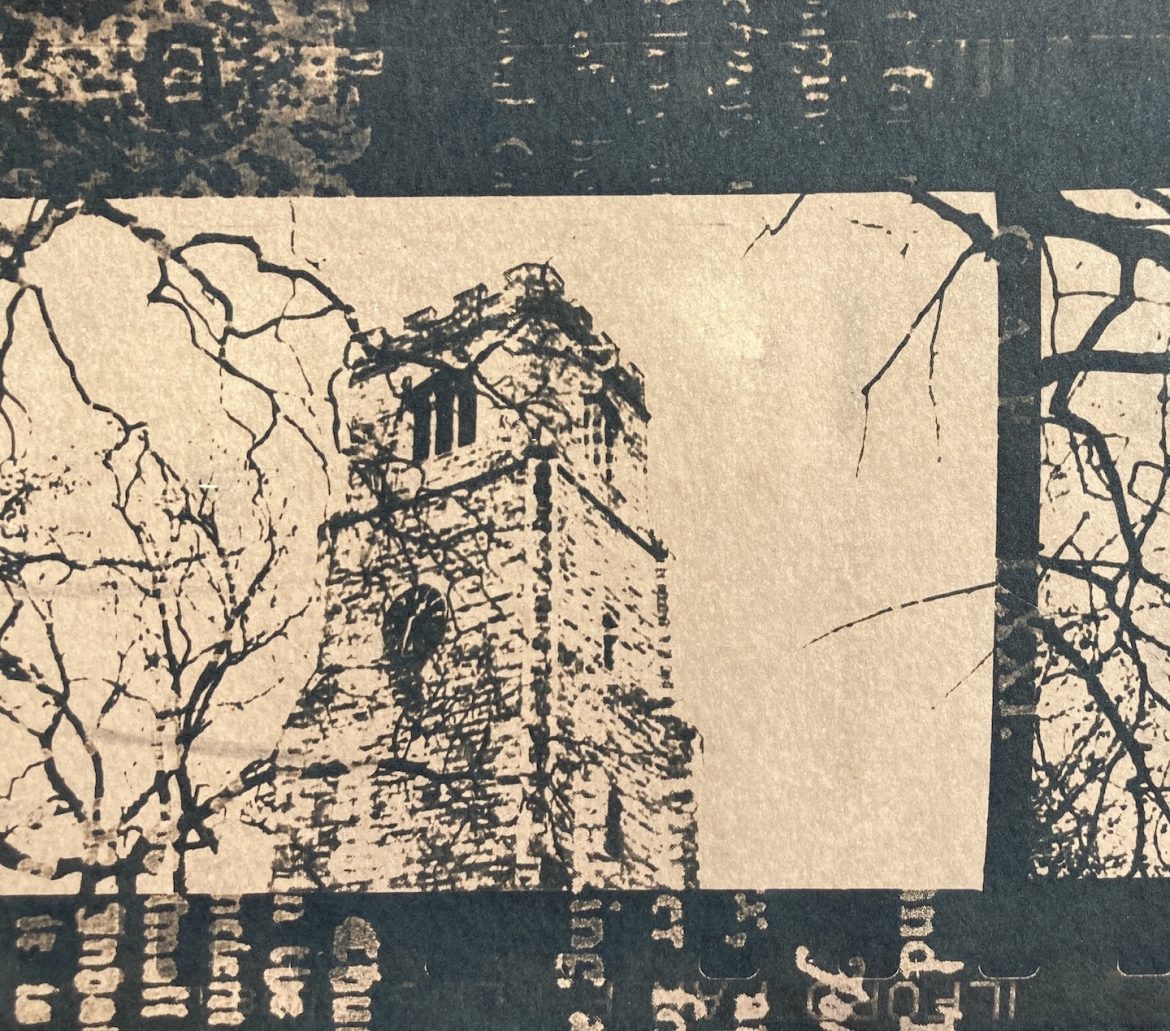
‘Still Standing’ is a site-specific cyanotype installation made for St. Augustine’s Tower, the oldest building in Hackney, London. This tower is all that survives of the original parish church, which was demolished in 1798.
Phytograms
A phytogram is a print made by harnessing the internal chemistry of plants to create images on photographic emulsion, which is usually coated on to paper, but can also be on glass or film. Plants are treated with developer (Milena makes hers from plants), and then pressed into the emulsion and exposed to light. Depending on the pressure applied to the plant, a phytogram can take on a deeply haptic quality, because the plant can emboss itself into the emulsion, or it can be more of a surface image. On glass, in particular, a phytogram can become three-dimensional, as the emulsion can move and loosen during contact with the wet plant, and when it re-dries it gains extra texture. On paper, a phytogram can range from appearing to be a delicate, shaded pencil drawing, to seeming more like a strong charcoal or ink line-drawing. Phytography is, ideally, more than a technique; it is a two-way interaction between humans and nature, a consideration of other species. One of the special qualities of a phytogram is its unpredictability: each plant is unique and so too is each set of environmental circumstances during creation.
Milena’s phytograms tend to use plants from locations specific to each project.
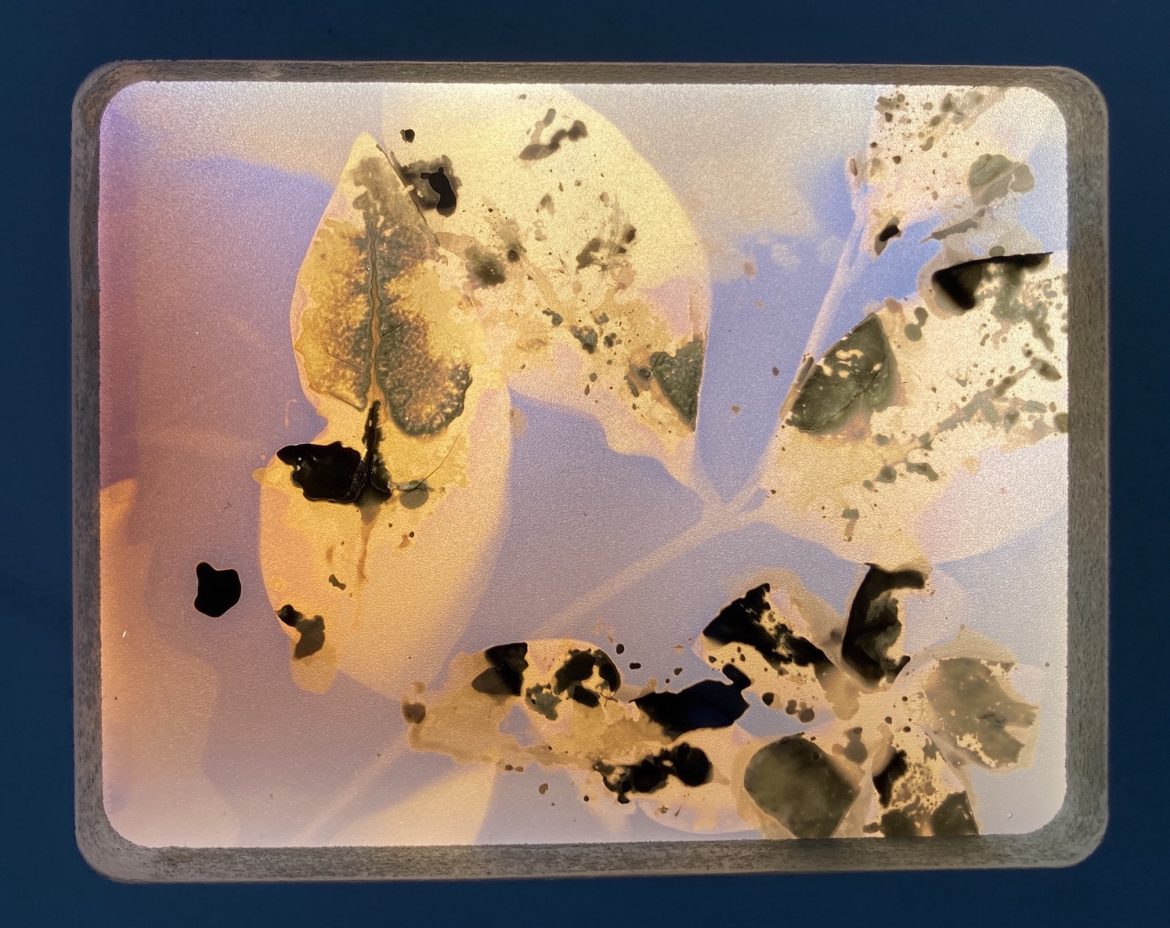
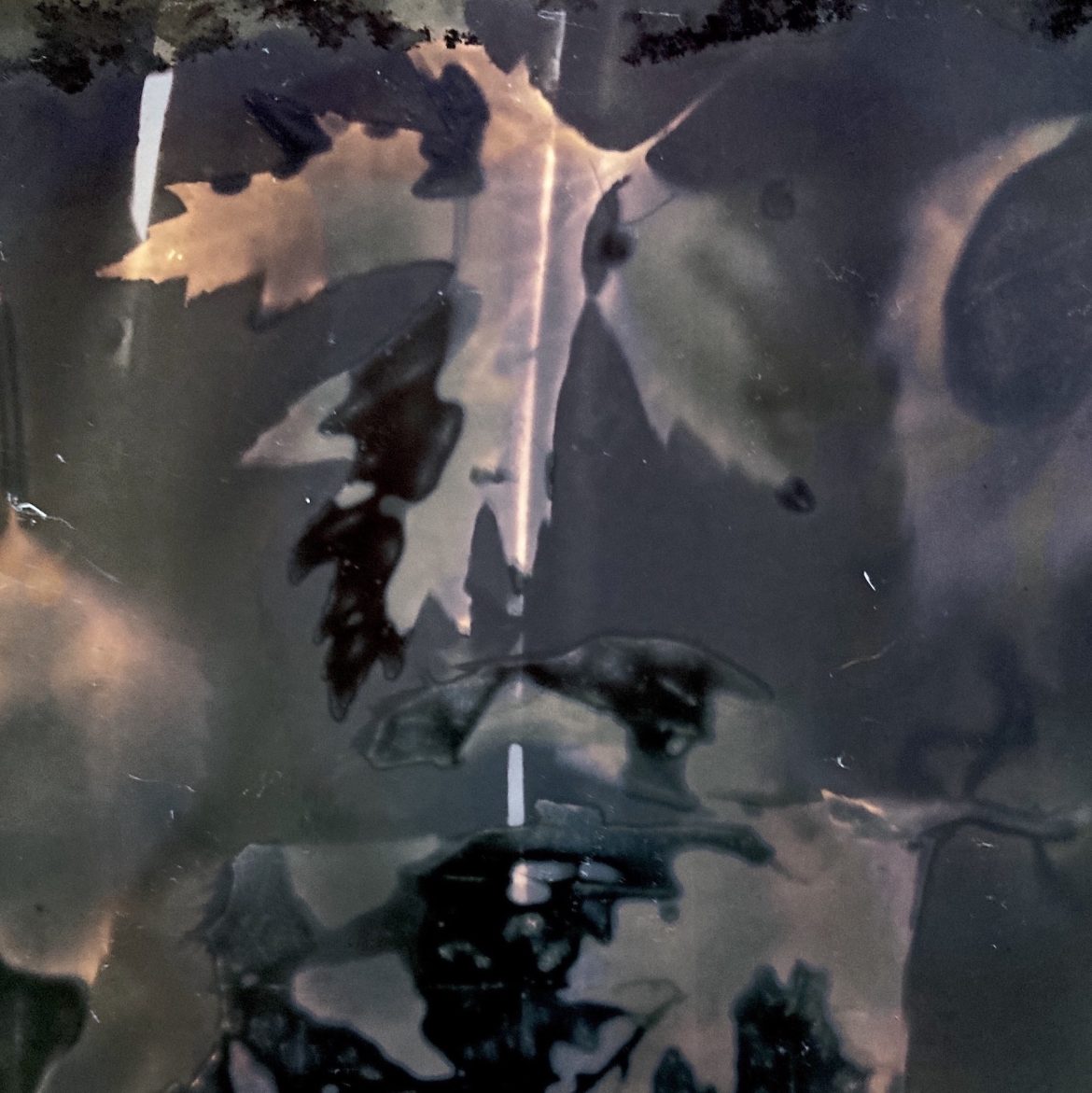
‘Lucia in Lumine’ is part of a series of phytograms, including this sculptural one on glass set within an illuminated wooden house. The image is created from leaves growing in places that the photographer Lucia Moholy lived and worked. For more on Milena’s project see it featured in the documentary film ‘Lucia Moholy: Bauhaus Photographer’ written and directed by Sigrid Faltin, 2024.
‘Fade Away (Radiate)’ is a phytogram combined with a chemigram print, in which various plant and food substances were added to the light-sensitive paper to create resists and make marks, along with the plants.