“Sourcing Print Artwork” Part 1
How to start or source a print? Visual artists take differing routes and methods to establish themes, direction or subject. The end result of a print takes an amount of rehearsal, development of thought before being translated in the various processes and differing methods of printmaking. The end production may be the result of several ideas, reviewed and reworked, a struggle with a theme searching for a form or print application. Sometimes the ideas are established from personal experience, lived knowledge of a particular area or a philosophical/psychological sense of subject more emotively defined. In one sense these are mind maps of those impressions, visual experiences, interests or research that have been carried out within an individual’s practice. For others, feelings and formal concerns are to the fore. Colour, texture, line and sensual experiences drive the context of the art. Whatever the selected elements of interest for the artist, a method of selection, finding sources, research and editing is required.
Times have changed since my ’70’s training. The appearance of the personal computer during the 1980’s along with the WEB has become ubiquitous in most homes, offices and studios has changed the potential to research or ‘tour’ around ideas and interests. Back in my college days notebooks or sketch books were the focus of an individual search, full of material gathered by drawing, collected clippings, postcards from museums/galleries or photocopies that had only recently progressed from fast fading copies and for a price could be in colour. A search required a physical journey, trips to collections in galleries or museums or to research sources through books, library of specialist knowledge or substantial published research. Now through the computer we can access virtual collections of material in many differing forms, information being sited across the world but accessed by the web. Reference to a film can be accessed without waiting for a particular showing and be easily supported by critical text/histories by a computer. Most information can be accessed directly and in overwhelming detail. Knowledge feels to an extent, a matter of coursing through a virtual sea of information, images, opinions and critical thought. Though it can also be a collection of myths, misinformation, lies and inventions. It still can be a task to find original sources or lines of investigation not coloured in by ideology or invented narratives. For a younger generation a large part of the preparation towards a work has moved from tangible material to a virtual collection that needs critical assessment and care in gathering,
Ironically, the virtual collections are still vulnerable to get lost through technological progress and changing formats. We all have photographs stored on various devices or the cloud which may never have a material form or be seen other than during a scroll through search. The preparation for print processes has most rapidly changed, no longer the dark room skills of past years, the early stages are often stored on drives, virtual files processed through graphic software. Work may come from hybrid forms such as video or other digital forms and be printed by large format printer or 3D printers. This interchange will progress and expand. However, for most printmakers price and complexity hold print to more tradition approaches which can still prove for initiative presentational forms (installation, 3D construction, printing on to canvas or art book forms) or take a radical approach to subject/imagery then distributed in more communal forms. Print still has it stance as art that requires paper or flat support which can be displayed as suggested in several differing forms. It is as yet a material visual form.
Chance and accident can still occur in the virtual world, usually through mishandling or mistaken use. In the digital world the flow of thought and production are fast regulated and corrected. Programmed making, construction of work becomes distanced from the original curator, mediated by software as to form and outcome. The distance between artist and artwork, contained. Works can be transmitted great distances across the world to digital devices which will give a printed form based on the data sent. Much has already been written on the distancing of originator’s hand to the production of art, which may be the way of the future. But there are arguments that maintain the importance of the human physical involved in the crafting of art in its various forms, where the fluid conjunctions and certainties of knowledge are best tasted.
‘Sourcing Print Artwork’ Part 2
Surely printmakers must be openly aware of those particular formal qualities within the materials use? The machinery(presses), plates/blocks, tools and applied methods create the grammar and lexicon of meaning plus reflection of subject’s context in the made work. To be interested in print as a practice within its own terms.
Returning to sourcing print work, I have always worked preparation ideas through sketch/notebooks, preferring to progress ideas through several stages, following themes, paths of different directions and dead ends. Many ideas stray away from the mind’s eye picture of the work, not going anywhere yet have value as potential scope to be revisited in the future. Hence the sketch books are a storage of dead ends awaiting a reawakening at a future date with renewed consideration.
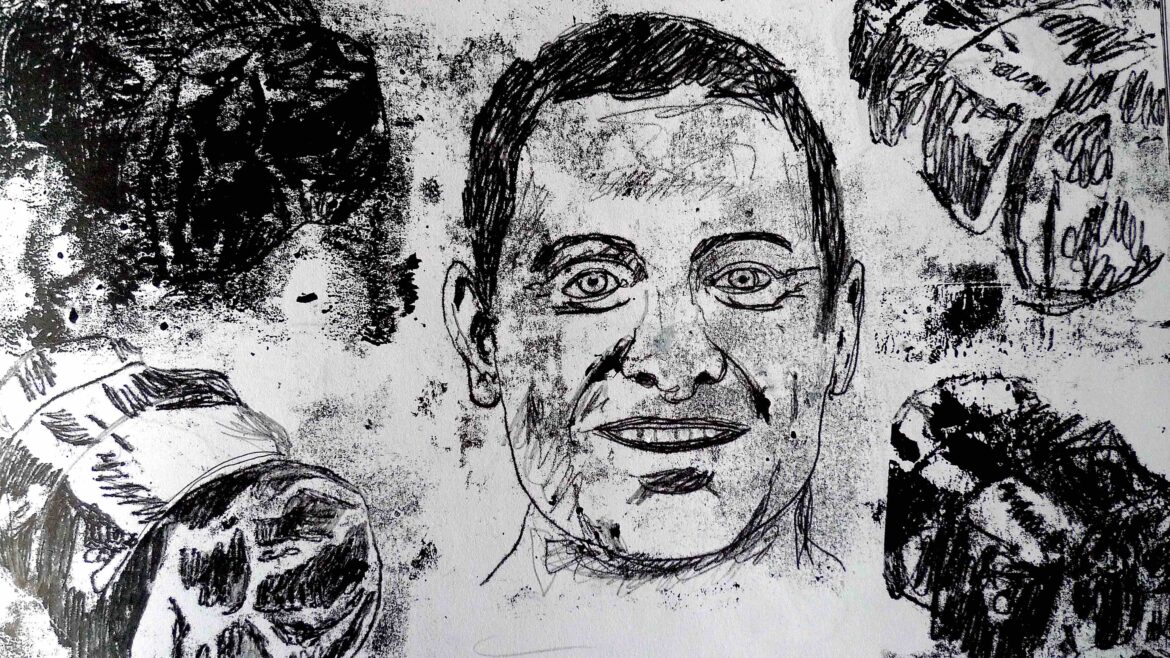
The sketch books fall into two forms, firstly as scrap book collections of found labels, imagery, clippings, postcards, collected bits and pieces of interest. A Magpie collection of found and visually interesting material from everyday life. The other sketch books are more dynamic, being collections of directly printed plates, relief blocks, collage prints, mistakes and experimentation via printing directly onto the pages of the sketch book. With no particular plan other than ‘try that and see’. The lay of the ink, both over or under inked – watered down, heavily pressed or barely touching the surface. Almost playing with various ways of making a printed impression. I would use different methods of applying ink by cloths, sponges, newspaper, knives or brushes. Mono printing from gel plates, sheet of glass or plastic. Slamming shut inked surfaces between pages or dropping from heights. Often with dead end results but often finding that the speed of application would encourage unconventional approaches and methods (which has influenced approaches to finial works) Comical as it may appear, these sketch books have become a form of editing machine, testing out printing ideas or new approaches – breaking the formal adherence to the usual methods or rules of printing. Much like the temptation to print inked figure prints onto scrap paper to make forms, landscapes, whatever is on its surface in idle moments between waiting for the press to be free. The sense of the materiality of printmaking materials, its properties, the physical feel or the tactile structure are part of the sense of the printmaking world potential. Like learning another language, printers need to know the close touch of surfaces and snap of a silkscreen to gauge knowledge of visual expression, just like that experience of materials that painters and sculpture also employ in the making of work.
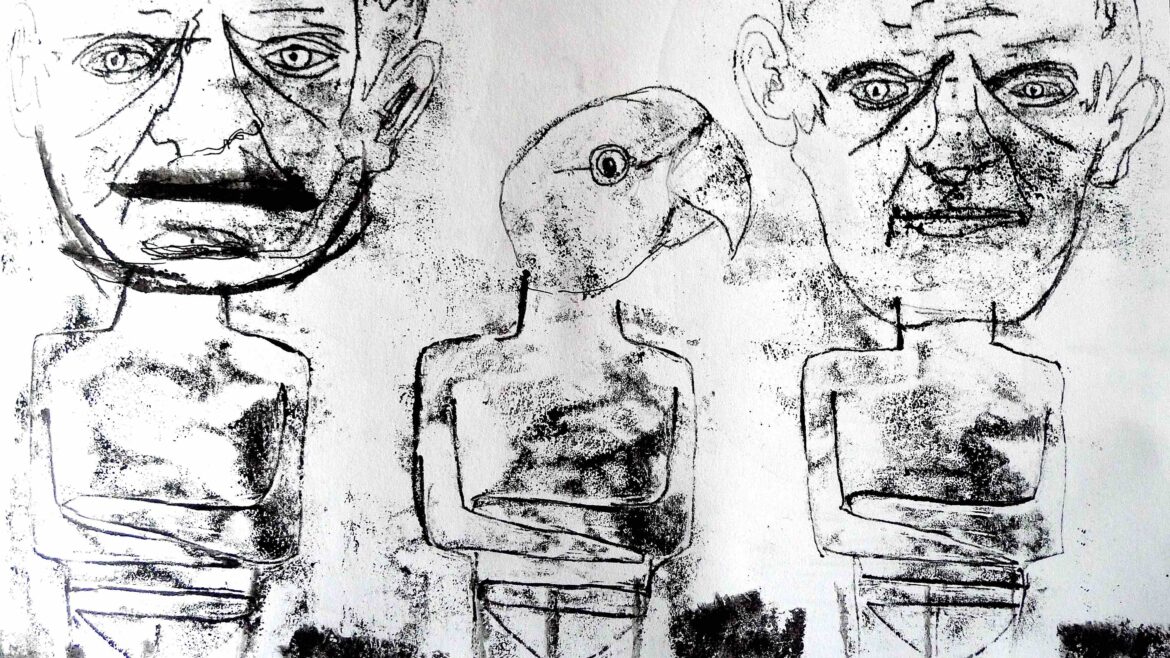
The sourcing of a print work will depend as much on your physical relationship to print processes as it does to the crafted rules and careful control of print methods or the relation of practiced eye to hand crafted practice.
Stephen Mumberson – Co Chair of PMC